Family Wildlife Safari TraveL
A family wildlife trip is the single most powerful way to show your children that the natural world is real, fragile, and worth protecting.
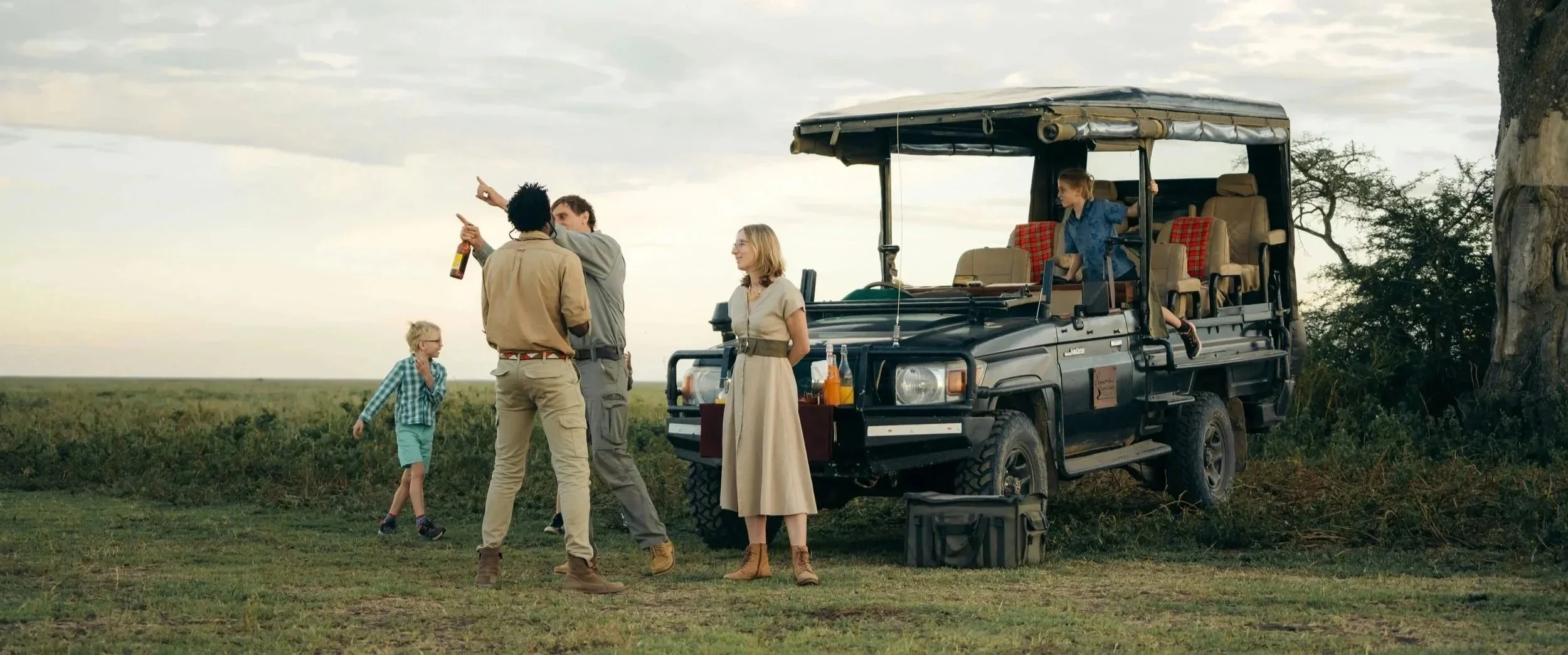
I recommend designing family wildlife trips with a specific philosophy: children should not be managed around the wildlife experience but they should be central to it. The right lodge, the right guide, and the right pace mean the difference between a child who is bored in a vehicle and a child who is the first to spot the next leopard.

Sign up to receive my weekly newsletter on wildlife, conservation, and travel that puts the natural world first.
FAQs
What age is appropriate for a child's first safari?
This depends on the destination, the child, and what you are comfortable with. Most lodges in private African game reserves set minimum ages between 6 and 10 for open-vehicle game drives. This is not arbitrary and relates to your child's ability to sit still and quiet in proximity to large animals, and the liability frameworks lodges operate within.
That said, the minimum age is not necessarily the right age for your family. Some children are ready at six. Others are better suited to eight or nine. The key question is not "can my child sit in a vehicle?" but "will my child be engaged enough by what they are seeing to enjoy three hours in the bush?"
For younger children (under 6): South Africa's malaria-free Eastern Cape reserves (Kwandwe, Shamwari, and Kariega) are purpose-built for families with small children. They offer enclosed vehicles, shorter drives, child-specific bush activities, and none of the malaria complexity that adds stress to a family trip. Kenya's Laikipia Plateau is another strong option, with several family-oriented conservancies that welcome children from age four.
For children aged 6–12: This is the sweet spot. Most of East and Southern Africa opens up. Kenya's Masai Mara, Tanzania's Serengeti, Botswana's Okavango Delta, and South Africa's greater Kruger region all have excellent family lodges. Children in this age range are old enough to be genuinely fascinated by animal behaviour and young enough to be profoundly affected by the experience.
For teenagers: Teenagers thrive on expedition-style travel (walking safaris, canoe trails, gorilla trekking in Rwanda or Uganda, or polar expeditions). The key is giving them agency and challenge, not just a comfortable seat in a vehicle. The best teenage wildlife experiences feel like genuine adventures, not curated tours.
For polar expeditions, most operators set minimum ages between 8 and 12. Antarctica is physically demanding (zodiac landings, cold conditions, long days), and the right age depends more on the child's resilience and interest than a fixed number. Read my full Antarctica expedition guide for more details.
Which destinations work best for families?
The best family wildlife destination is the one that matches your children's ages, your tolerance for logistics complexity, and the kind of experience you want to have together. Here is how I think about it:
Lowest complexity:South Africa (Eastern Cape) No malaria. Short, direct flights from Cape Town or Johannesburg. Lodges designed specifically for families. Excellent wildlife including the Big Five. You can combine a safari with Cape Town, the Garden Route, or the Winelands without internal flights. This is my default recommendation for first-time safari families with children under eight.
Best all-round family safari: Kenya Kenya offers the strongest combination of family lodge infrastructure, open savannah landscapes, accessible wildlife, and cultural richness. The Masai Mara conservancies limit vehicle numbers and offer walking, night drives, and community visits that are genuinely engaging for children. Laikipia's family camps are some of the best-designed in Africa. The coast adds a beach extension if you want one.
Most immersive: Botswana Botswana is wilderness-heavy, lodge-based, and quiet. The Okavango Delta offers mokoro (canoe) safaris, walking, and water-based game viewing that children love. The trade-off is cost (Botswana is premium-priced) and the internal flights that most itineraries require, which add travel time.
Best for older children and teenagers: Rwanda, Tanzania, Galápagos. Gorilla trekking in Rwanda is one of the most profound wildlife encounters on Earth, and teenagers old enough to handle the hike (minimum age 15) are the ideal audience. Tanzania's northern circuit suits active families. The Galápagos is extraordinary for any age but rewards the child who is old enough to understand evolution and observe behaviour rather than just point at animals.
Polar: Antarctica A family Antarctic expedition is a serious undertaking and an extraordinary one. The children I have seen on expedition ships who got the most from it were typically 10 and older, with genuine curiosity about the natural world. The right vessel matters enormously; smaller ships with strong naturalist teams and flexible scheduling create better family experiences than larger ships with rigid programming.
For multi-family or large group bookings, see The Private Group. I also write about family-friendly conservation in my blog, Field Notes.
Is a family safari safe?
Yes. The safety record of reputable safari lodges and expedition operators is exceptional. This is a tightly managed industry with decades of experience hosting families.
On safari, you are accompanied by professional guides at all times. Lodges in private concessions control access, maintain fencing where appropriate, and have strict protocols for wildlife encounters. The animals are habituated to vehicles (they are not tame, but they are not startled by a Land Cruiser). The genuine safety risks are mundane: sun exposure, dehydration, and the odd insect bite.
The malaria question is the one most families fixate on, and understandably. My practical advice: if malaria concerns are a significant source of anxiety, choose a malaria-free destination for your first trip. South Africa's Eastern Cape and parts of the Western Cape are entirely malaria-free. Several reserves in Kenya's highlands are low-risk. Removing malaria from the equation removes the single biggest stress factor for families travelling with young children.
On expedition ships, safety protocols are maritime-grade. Zodiac briefings, mandatory life jacket usage, and experienced expedition leaders manage every landing. Children are supervised closely, and operators with strong family programs assign dedicated staff to younger passengers.
How do I make the experience genuinely educational?
The wildlife does most of the work. A child who sees a cheetah hunt, watches a dung beetle roll a ball twice its size, or stands on a beach surrounded by ten thousand penguins does not need a lesson plan. The experience teaches itself.
What you can do is create the conditions for that experience to land properly:
Before the trip: Talk about what you are going to see. Let your children choose an animal they are particularly interested in. Watch a documentary together. Read a field guide or books on that theme. The child who arrives knowing what a wildebeest is will get more from seeing one than the child who has no frame of reference.
During the trip: Ask the guide questions in front of your children to signal that their curiosity is valued. Give older children binoculars and a notebook. Let younger children draw what they see. The best family guides naturally calibrate their explanations to the age of the child and know how to make a six-year-old feel like a participant rather than a passenger. Many top lodges and expedition ships provide provide educational nature activities.
After the trip: Talk about it. Let your children tell the story. Encourage them to share their wildlife sighting with their grandparents. A trip journal, a photo book, or even just dinner-table conversation cements the experience in a way that a phone full of photographs does not.
How do I choose a responsible operator for my family?
Your children are always observing. The operator you choose teaches them what kind of relationship humans should have with wild places.
Look for operators that demonstrate genuine commitment to conservation and communities, not just marketing language. Specifically":
Land and wildlife protection: The lodge should operate within or adjacent to a protected area, with conservation funding directly tied to guest revenue. Ask how occupancy rates connect to anti-poaching, habitat restoration, or species monitoring. If the answer is vague, move on.
Community benefit: Employment should be local and meaningful (not just housekeeping and laundry, but guiding, management, and ownership where possible). Community development programs should be visible and specific, not a greenwashed line on a website.
Low-impact infrastructure: Solar power, water recycling, waste management, limited vehicle numbers, controlled access are all practical indicators of a lodge that takes its environmental footprint seriously.
Ethical animal encounters: A quality operator will have absolutely no captive interactions, no baiting, no feeding, no riding of any animals. If an operator offers elephant-back safaris, lion walks, or any activity involving captive wildlife interaction, it is not responsible.
If an operator cannot explain clearly how your family's presence contributes to conservation and communities, I would encourage you to look elsewhere.
What does regenerative travel mean for families?
Regenerative travel means the destination is measurably better because your family visited, not merely unharmed. For children, this can serve as a real lesson: the idea that travel can be an act of contribution, not just consumption.
In practice, this looks like lodges that fund anti-poaching units through bed-night levies, so your stay directly protects the animals you came to see. Or, conservancies where tourism revenue has replaced extractive land use, so the land your children walk on exists as wilderness because travellers like your family chose to come. They offer community programs where school fees, healthcare, and infrastructure are funded by the lodge, creating a direct link between your visit and tangible local benefit.
The most powerful version of this for children is when they can see it happening. This can include a visit to a community school, a conversation with a ranger about why they chose conservation as a career, a guide explaining that this land was a cattle ranch fifteen years ago and is now home to 40 elephants. These are the moments that shift a child's understanding of what travel can be.
How far in advance should I book a family wildlife trip?
Further than you think. Family-friendly lodges with limited capacity are among the first to sell out, because families travel during school holidays and the best properties have very few rooms.
Peak season (June–October for most of Africa, December–March for Antarctica): 12 to 18 months in advance is the practical minimum for first-choice lodges. The most sought-after family properties in Kenya and South Africa during July–August school holidays are often fully booked a year ahead.
Shoulder season: 6 to 9 months ahead usually offers good availability with more flexibility. Shoulder season in many destinations (November, March–May in East Africa) offers excellent wildlife, fewer crowds, and lower rates and is often better for families because the experience is quieter and more personal.
Polar expeditions: 12 to 24 months ahead for preferred vessels and departure dates. Family-suitable cabins (triples, interconnecting rooms) are limited on most expedition ships and are the first category to sell.
If you are booking under 6 months out, options exist but flexibility on dates and specific properties becomes essential. You can usually find strong alternatives at shorter notice, but your first-choice lodge is unlikely to be available during school holidays.